
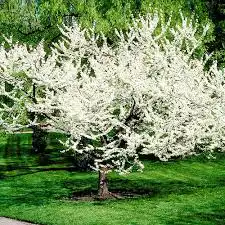
Tree ID: 12
Height: 15-25'
Diameter: 6-8"
Latin Name:
Cercis canadensis 'Royal White'
Common Name:
Royal White Redbud
Type of Tree: Ornamental
Type of Wood:
Description:
The cultivar ‘Royal White’ illustrates how inclined we are to be discontent. It’s considered a success when a white flowering tree such as a dogwood, can be coaxed into producing pink or red flowers. Here is an opposite situation when a redbud can be manipulated into producing white flowers. Still, there is something unique about the fine textured white flowers of this cultivar.
Eastern redbud is a deciduous, often multi-trunked understory tree with a rounded crown that typically matures to 20-30’ tall with a slightly larger spread. It is particularly noted for its stunning pea-like rose-purple flowers which bloom profusely on bare branches in early spring (March-April) before the foliage emerges. This tree is native to eastern and central North America from Connecticut to New York to southern Ontario and the Great Lakes south to Western Texas and Florida. It is found in open woodlands, thickets, woodland margins, limestone glades and along rocky streams and bluffs throughout its range. Flowers to 1/2″ wide bloom in clusters of 4-10. Flowers are followed by flattened leguminous bean-like dry seedpods that mature to brown in summer. Each pod has 6-12 seeds. Pods may remain on the tree into winter.
The flowers provide an early-season nectar source for hummingbirds. The seeds and flowerbuds are eaten by songbirds. Caterpillars and other insects which feed on redbeds are also a source of food for birds. Deer tend to avoid this plant.
Canker can be a significant disease problem. Verticillium wilt, dieback, leaf spots, mildew and blights may also occur. Insect pests include Japanese beetles, tree hoppers, leaf hoppers, caterpillars, borers, webworms and scale. Keeping the tree vigorous by regular watering, fertilization and pruning out dead branches as needed will help keep the tree healthy.