Tree ID: 27
Height: 80-100'
Diameter: 30-60"
Latin Name:
Quercus alba
Common Name:
White Oak
Type of Tree: Shade
Type of Wood:
Description:
What a grand tree, noble, majestic, durable both in appearance and in actual performance. In all seasons, this tree inspirational; never gaudy or flashy but always solidly attractive. The structure, foliage, bark color; all of its attributes come together to cause one to reflect…
White Oak Attributes
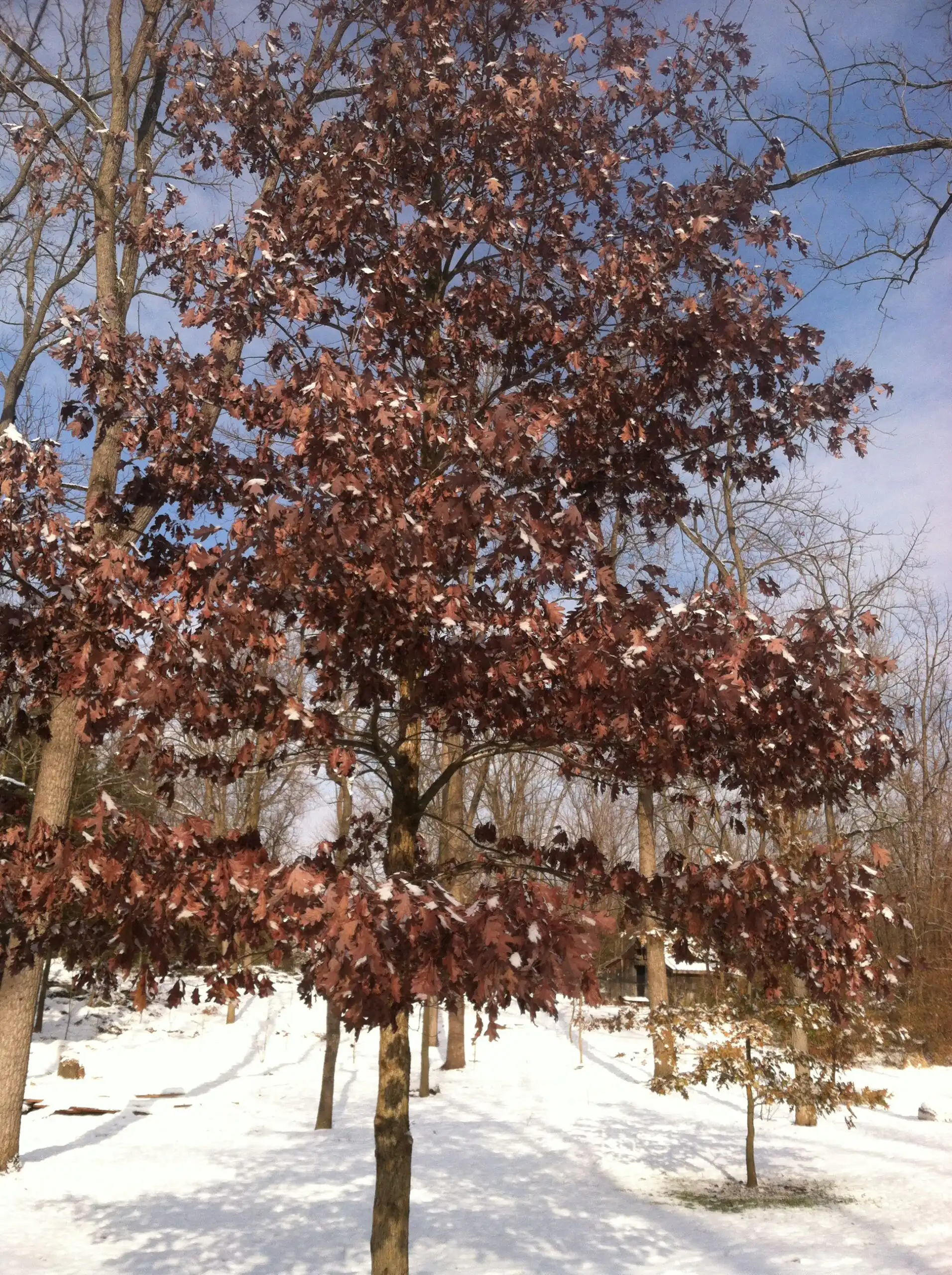
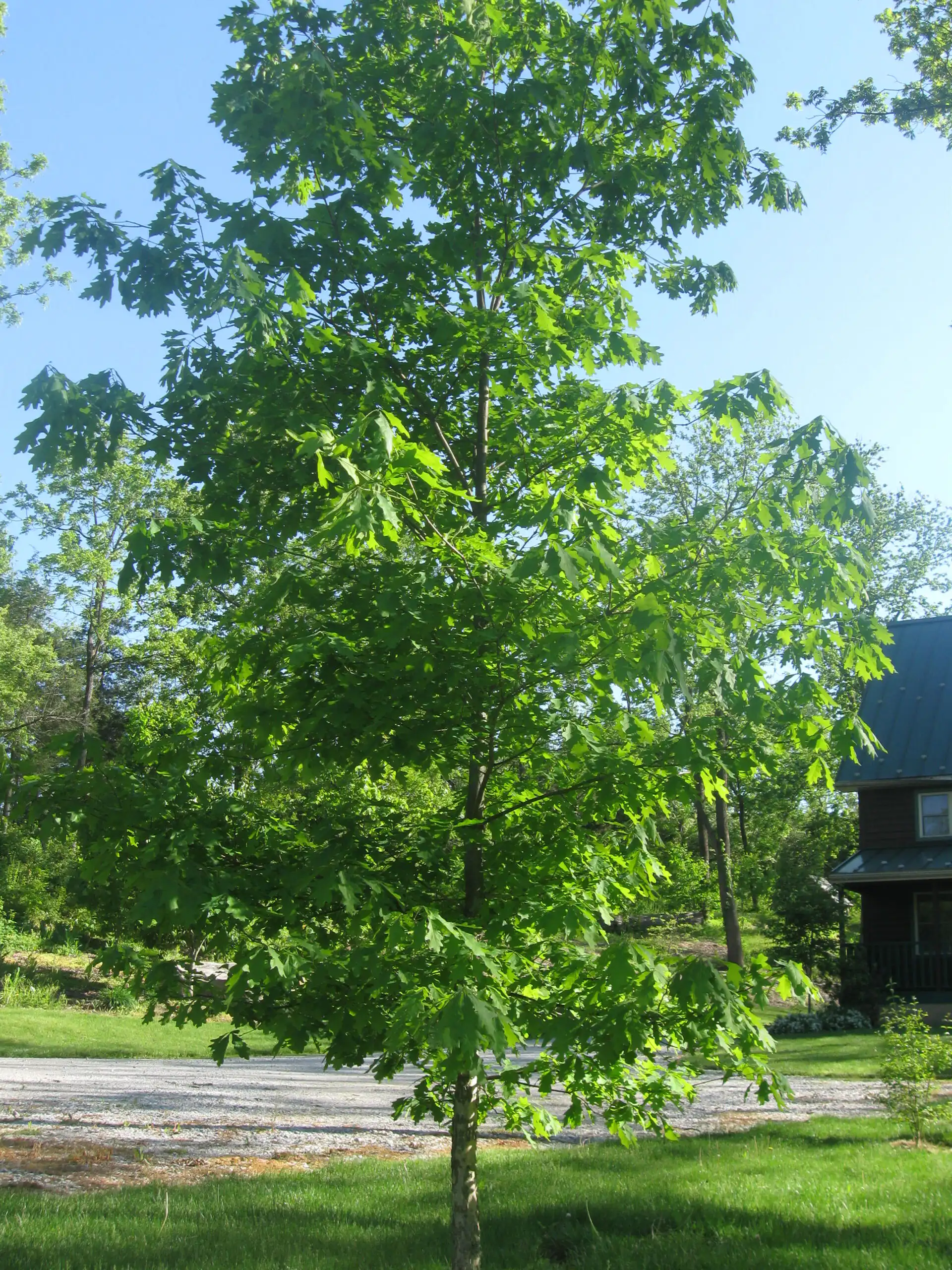
Leaves are round-lobed which is typical of trees of the white oak group. Leaves open in the spring with pinkish hues that change to a soft, light green and finally maturing to a rich, medium dark green. Fall color is usually a russet-red or burgundy. Young trees sometimes retain the foliage into the winter (marcescent) but older trees almost always have clean leaf drop in the fall.
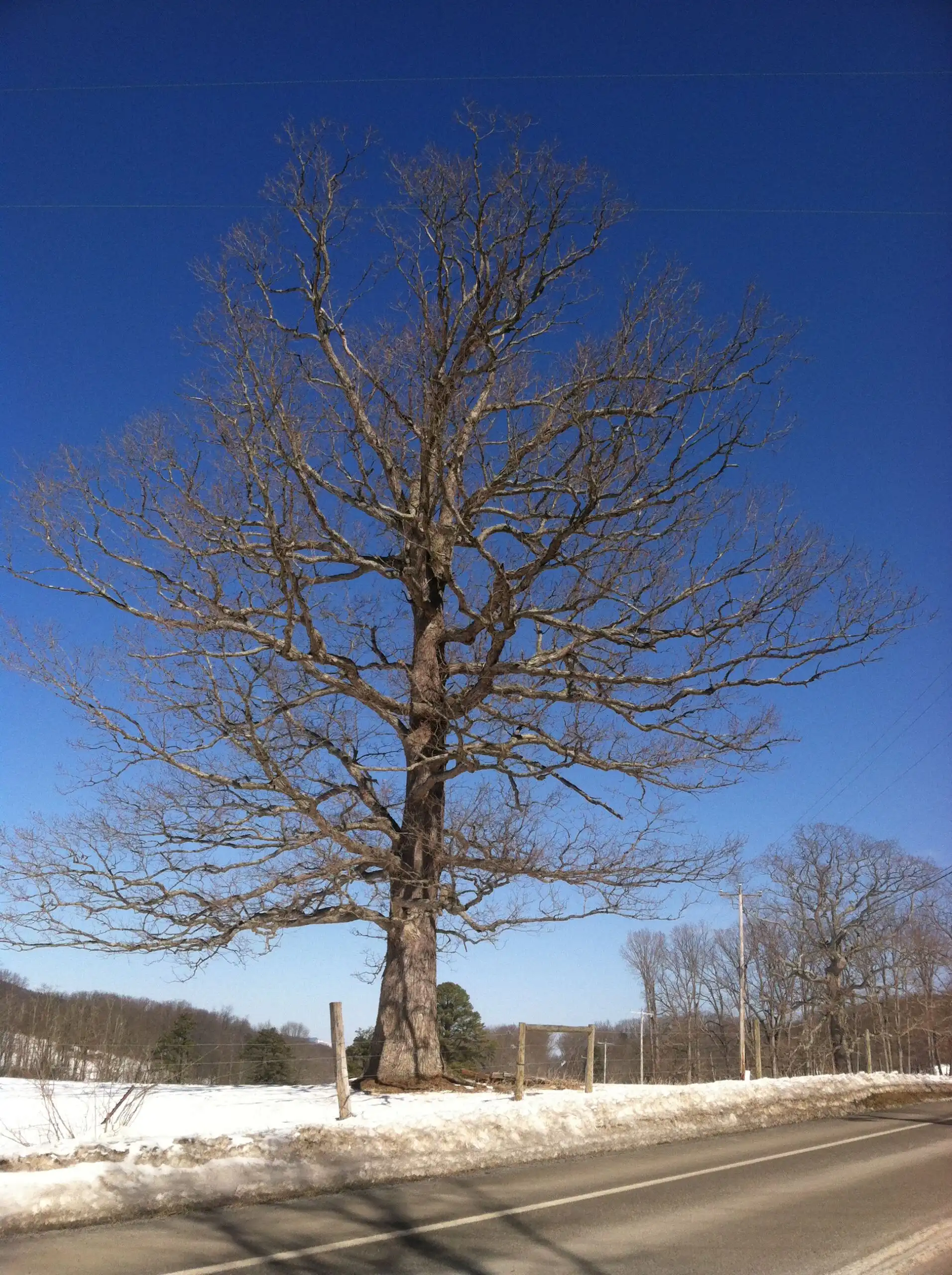
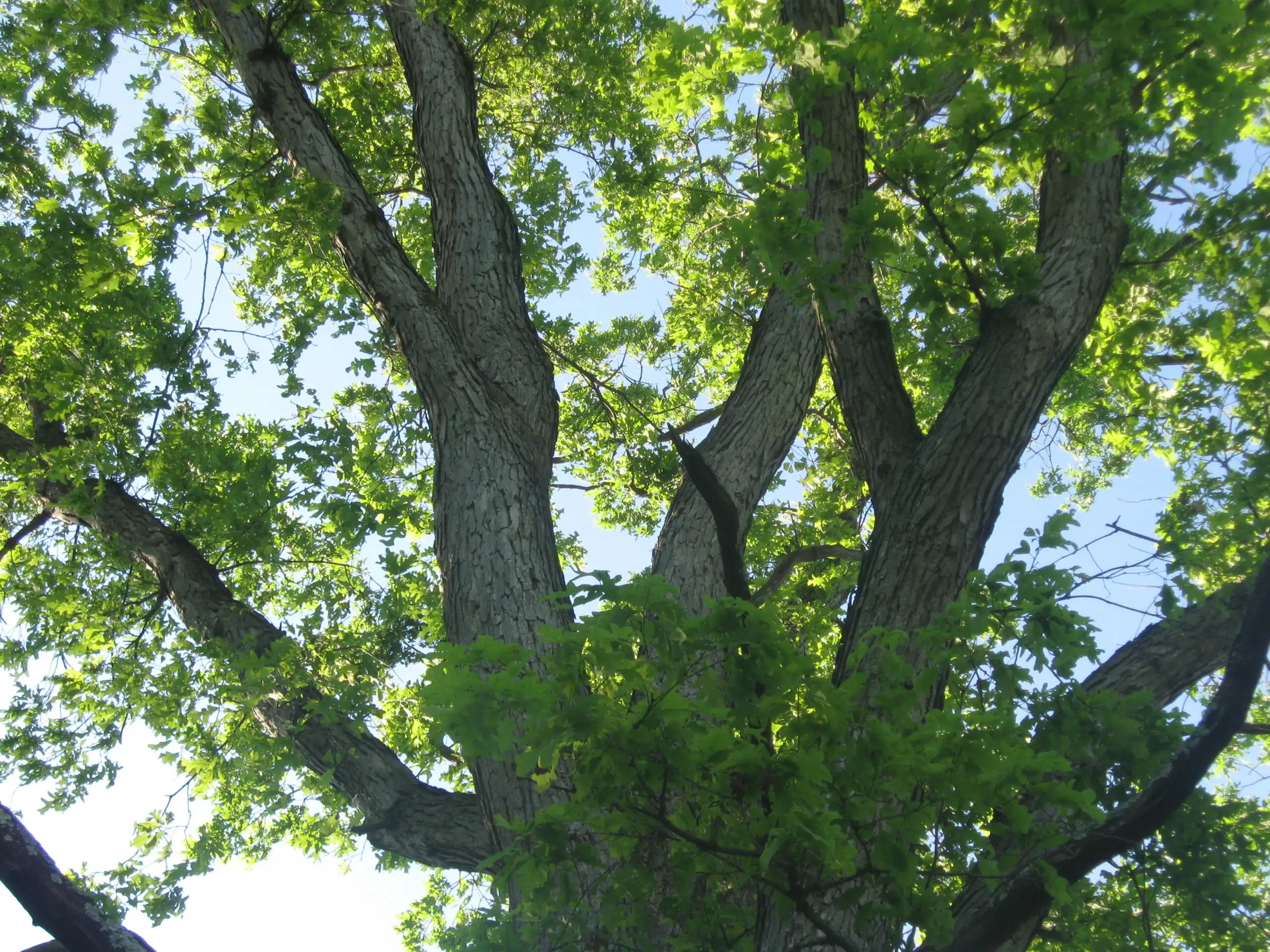
The bark is broken into small vertically arranged blocks or longer scaly strips. The bark color is a light ashy-grey that blends beautifully with the foliage in all stages of development. And when the growing season is ended, it continues its appeal in the dormant season blending its colors and textures with the solid structure and curves of the stem against the winter sky. This is truly a four season performer.
And perform it does if properly propagated and planted. Yet it is not often utilized in contemporary landscapes and when it is, it often fails to thrive or even survive.
While majestic and durable, white oak popularity suffers for three reasons…
- White Oak is difficult to transplant
White oak, like many other Oaks does not take kindly to losing a large percentage of its root system. Consequently, it fails the survivability test under conventional nursery practices. With root pruning, we have been able to successfully grow this tree at Woodlawn. - White Oak does not tolerate change well
A new patio or driveway, excavation to fix a water line or simply soil compaction from people or equipment wreak havoc on the root systems of many of our landscape trees. White Oak is especially sensitive to changes and a small construction project can be the beginning of the end for an otherwise healthy tree.
- White Oak is a patient tree
It takes an investment of time for White Oak to become a stately and noble tree. Today’s buying public too often have the short-sighted demand for instant gratification.
As with any other endeavor, successful white oak culture simply means working within the limitations. The challenges of placing this somewhat stubborn performer in your landscape can be surmounted with a few common sense guidelines…
- Be sure you have a suitable environment
While not extremely hard to please, white oak will not tolerate extremely poor soils. Do not attempt to place this tree in poorly drained or severely compacted soils. Also be certain you have enough room for this tree to grow. - Think ahead
White Oak should be planted where it can grow undisturbed for centuries. Place the tree at a location where it is not likely be in the way of future construction or excavation sites.
With consideration of limitations and a little foresight, white oak may be a tree that can be placed in your landscape and leave a legacy for many years to come.
Photo Gallery