Tree ID: 32
Height: 50-70'
Diameter: 24-30"
Latin Name:
Quercus ellipsoidalis
Common Name:
Northern Pin Oak
Type of Tree: Shade
Type of Wood:
Description:
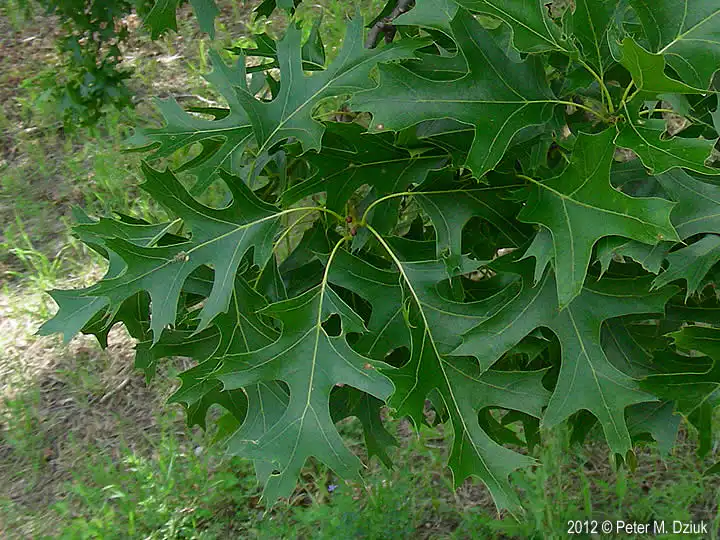
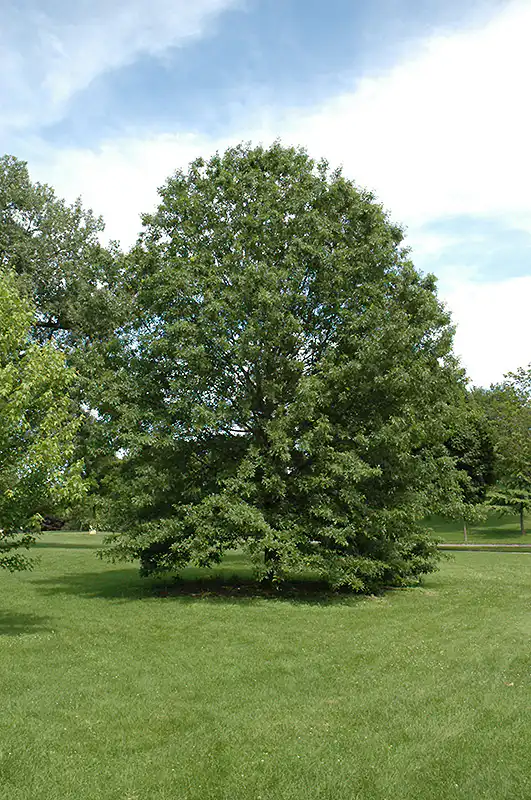
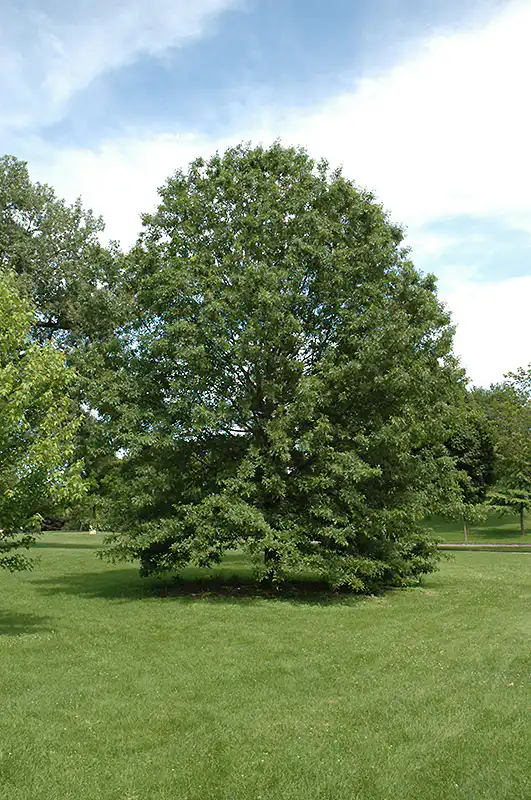
Northern pin oak, sometimes called hill’s oak or jack oak, is a medium-large deciduous oak of the red oak group that typically grows 50-70’ tall with a cylindrical shape and rounded crown. Upper branches are ascending, but lower branches descend toward the ground. In the wild, the lower branches are often shaded by other trees, with some branches eventually dying and breaking off leaving persistent pin-like stubs, hence the pin oak part of the common name. Elliptic dark green leaves (3-7” long) have 5-9 deeply incised, bristle-tipped lobes. Leaves turn a relatively non-showy russet red in fall. Insignificant monoecious yellowish-green flowers in separate male and female catkins appear in spring as the leaves emerge. Fruits are elliptic acorns (to 3/4” long), with saucer-shaped acorn cups that cover 1/3 to 1/ 2 of the acorn. Acorns mature at the end of two seasons. Acorns are an important food source for wildlife (e.g., deer, bears, squirrels, small rodents and some birds). Smooth gray-black to dark brown bark usually develops ridging with age. Trunks mature over time to a diameter to 3’.
This tree is primarily native to dry sandy sites including dry upland woods from northern Missouri to northwestern Ohio north into southern Canada (Manitoba and Ontario).
Northern pin oak is similar in appearance to pin oak (Quercus palustris). One distinguishing difference is that the acorns of northern pin oak are narrower and longer than those of pin oak. Also, pin oak is primarily a lowland tree that is native to areas south of the more upland northern pin oak.
As with pin oak, northern pin oak can experience chlorosis (yellowing of leaves) common in alkaline soils. Northern pin oak is can also be infrequently attacked by the common diseases of oaks which include oak wilt, chestnut blight, shoestring root rot, anthracnose, oak leaf blister, cankers, leaf spots and powdery mildew. Potential insect pests include scale, oak skeletonizer, leaf miner, galls, oak lace bugs, borers, caterpillars and nut weevils.
Photo Gallery